
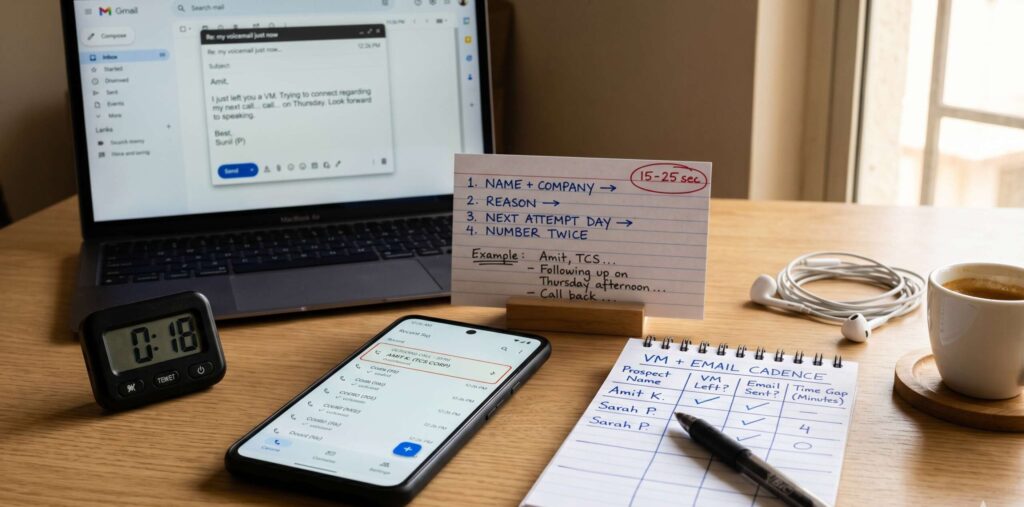


This guide covers whether voicemails still work in 2026, the anatomy of a voicemail that gets returned, 10 template scripts for different scenarios, and the voicemail + email combo that outperforms either alone.

Most B2B teams lose 40–60% of qualified prospects to broken handoffs and weak qualification. Take our 2-minute diagnostic to find out where your pipeline is bleeding — and how to fix it.
Start the Quiz → Takes 2 minutes. No email required to start.Do Voicemails Still Work in 2026?
Qualified yes. Leaving voicemails consistently produces a 3 to 4 percent callback rate across B2B cold calling programs. That is not high, but it is meaningfully better than zero, and it keeps your name in front of the prospect even when they do not answer.
The better framing: voicemails are not primarily about getting callbacks. They are about creating recognition that lifts your next call’s answer rate and your email’s open rate. Prospects who have heard your name are 2 to 3 times more likely to engage on subsequent touches.
The Anatomy of a Voicemail That Gets Returned
- Length: 15 to 25 seconds. Anything longer gets cut off or ignored.
- Start with your name and company. They need to know who this is before deciding to listen further.
- State the specific reason for the call. Not your company mission. Not a generic pitch. One concrete reason.
- Tell them when you will try again. Sets expectations and creates a small mental commitment.
- Leave your number twice, slowly, at the end. If they call back, this is how.
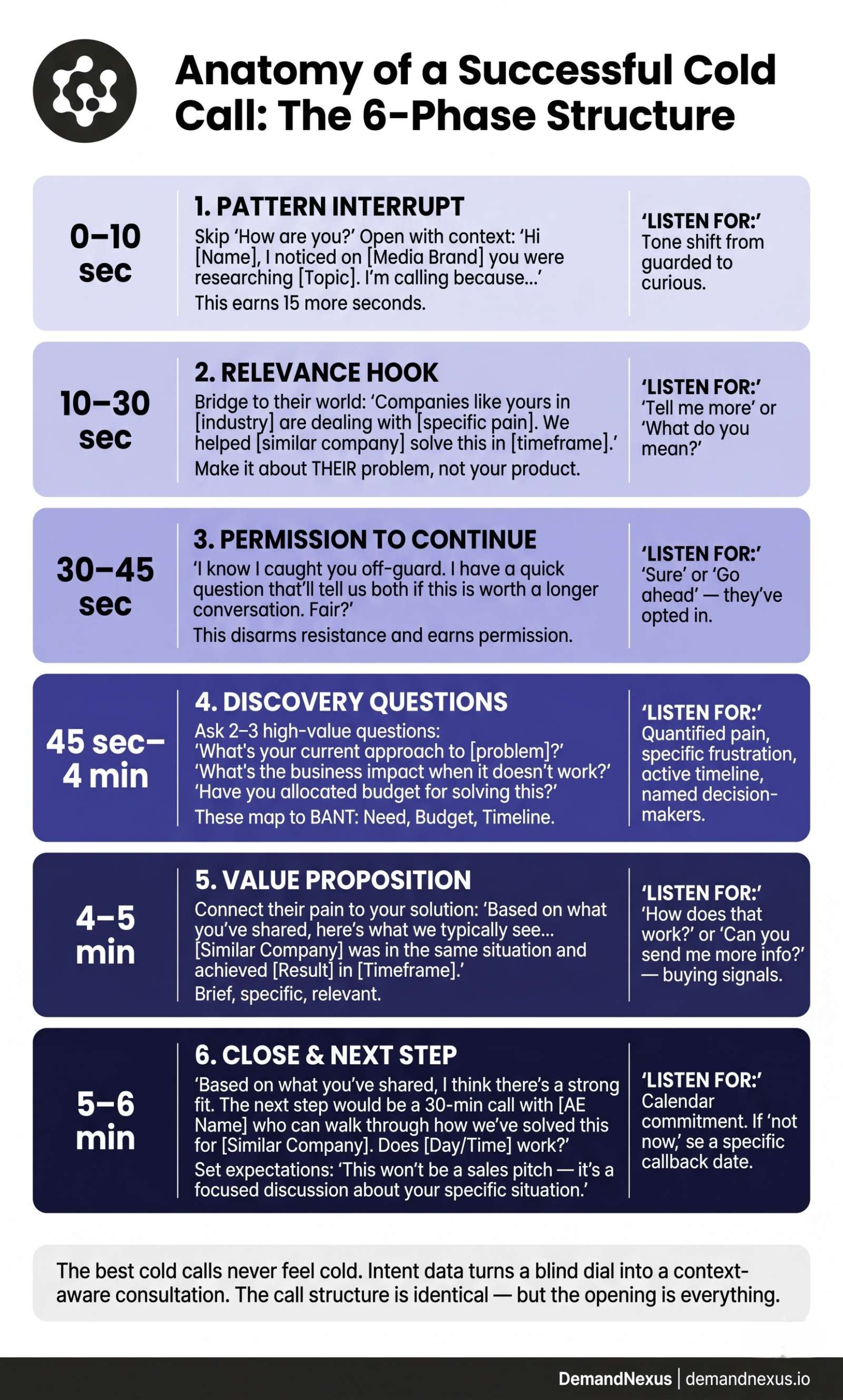

10 Voicemail Templates
Template 1: The 18-Second Classic
“Hi [Name], [Your Name] from [Company]. Reason for the call: we help [similar companies] with [specific problem]. I know you are busy. I will try you Thursday. If you want to reach me sooner, my number is [phone], again [phone]. Thanks.”
Template 2: The Referral Voicemail
“Hi [Name], [Your Name] from [Company]. [Referrer] suggested I call you. I have one idea that might be useful. I will send a short email as well. If you want to reach me directly, I am at [phone], again [phone]. Thanks.”

Template 3: The Research-Based Voicemail
“Hi [Name], [Your Name] from [Company]. I saw your post last Tuesday about [specific topic]. It made me want to reach out. I will send an email shortly. My number if you would rather call: [phone], again [phone]. Have a good day.”
Template 4: The Specific Problem Voicemail
“Hi [Name], [Your Name] from [Company]. Quick call because we just helped [similar company] [specific result]. I thought you might want the same. I will try you again tomorrow morning. If you want to catch me first: [phone], again [phone]. Thanks.”
Template 5: The Question Hook Voicemail
“Hi [Name], [Your Name] from [Company]. I have a quick question about your [specific area] that should take 2 minutes. Calling back Thursday at 10. My number is [phone], again [phone]. Talk soon.”
Template 6: The Breakup Voicemail
“Hi [Name], [Your Name] from [Company]. I have left a couple of messages and I do not want to be that salesperson. If [specific area] is not a priority, no problem, I will stop reaching out. If it is, I would love a quick conversation. My number is [phone], again [phone]. Otherwise I will move on. Thanks.”
Template 7: The Peer Mention Voicemail
“Hi [Name], [Your Name] from [Company]. Calling because we recently helped [peer company in same industry] [specific result]. Worth a quick conversation? My number is [phone], again [phone]. Thanks.”
Template 8: The Trigger Event Voicemail
“Hi [Name], [Your Name] from [Company]. Congratulations on [specific recent news, funding, hire]. I wanted to reach out because companies in that stage often face [related challenge]. Worth 15 minutes? My number is [phone], again [phone]. Thanks.”
Template 9: The Objection Preempt Voicemail
“Hi [Name], [Your Name] from [Company]. I know voicemails from salespeople are painful. So here is mine short. We help [role] with [specific problem]. If that is relevant, I would love 15 minutes. My number is [phone], again [phone]. Have a good day.”
Template 10: The Email Follow-Up Voicemail
“Hi [Name], [Your Name]. I am sending you an email right now with the full context. If it is interesting, you can reply there. Or call me back at [phone], again [phone]. Thanks.”
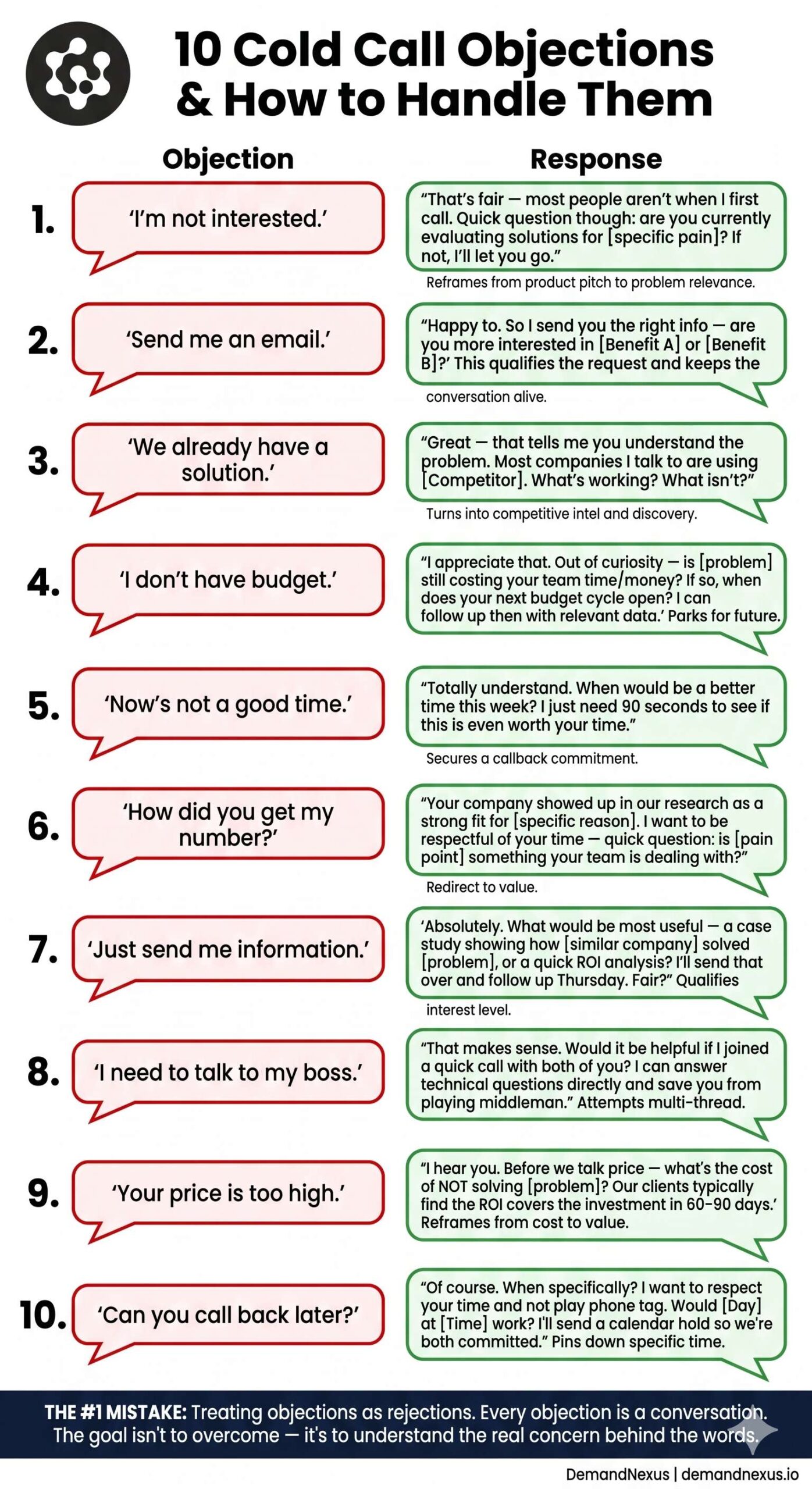
What Makes a Voicemail Fail
- Too long: anything over 30 seconds gets skipped.
- Rambling about your company: save it for the conversation, not the voicemail.
- Unclear reason for calling: makes you sound generic.
- No phone number or a rushed phone number: they cannot call back.
- Overly polished and salesy: triggers the telemarketer reflex.
- Fake urgency: “time-sensitive” when it is not damages trust.
The Voicemail + Email Combo
The highest-performing cadence pairs a voicemail with an email sent within 2 to 5 minutes. The voicemail creates recognition, the email provides the details. When a prospect checks their phone and sees the missed call, then checks email and sees your follow-up, you have created two touches for the price of one.
Optimal sequence: voicemail first, email within 5 minutes, subject line referencing the call, body 3 to 5 sentences max.
How Often to Leave Voicemails
Once per attempt sequence, not every call. A common pattern: call 1 with voicemail, call 2 without voicemail (because they just heard you), call 3 with a different voicemail referencing prior attempts, and a final breakup voicemail. Leaving a voicemail every single attempt becomes annoying.
FAQs
Should you leave a voicemail when cold calling?
Yes, but only a short, specific, valuable one. 15 to 25 seconds. If you cannot do that, skip the voicemail.
How long should a cold call voicemail be?
15 to 25 seconds. Anything longer loses attention. Anything shorter misses the reason-to-call-back moment.
Do voicemails actually get returned?
3 to 4 percent of cold call voicemails generate direct callbacks in B2B contexts. The bigger value is recognition lift on subsequent touches.